
WHO WILL WIN IN THE ECOSYSTEM RACE?

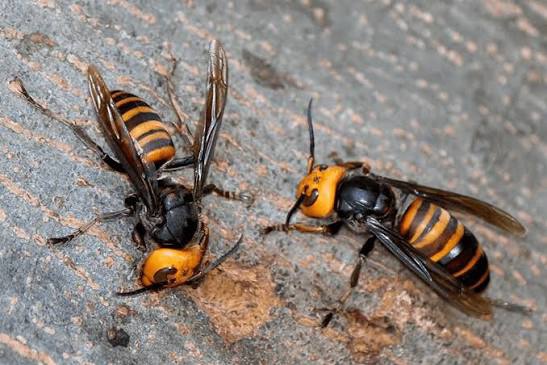
The ecosystem lately is facing the serious problem with the invasive species of hornets – Vespa velutina. This challenge has been known since 2004 when the first animals has been transferred to France in pottery from China. Since then, horror has been real, not only for bees and beekeepers but for local pollinators too. The Asian hornets are not just intruders that have big impact on the whole biodiversity in insect world but also, they disturb the beekeeping industry and the future of honey and wild bees.
The yellow-legged hornets that make blind immigration possible and did the reshape of our ecosystem math, has not only biological impact on our future but also economical. The damage those insects are causing by just killing beehives and producing deviations in apiculture all over Europe and America, is putting the global economy into the stress. How will we protect our bees and our pollinators? How will we deal with enemies from Southeast Asia that feel in Europe and America almost like at home? Those bugs don’t accept the borders, they spread like wildfire, and they do not care what we think about it. They found their place and won’t give up on establishing their presence in our biodiversity, even if that means removing others or reducing their number. Each Asian hornet can kil up to 50 bees and now do the calculation. This is terrible statistic that is targeting our honeybees, wild bees, wasps and butterflies. I had a seminar about this kind of hornets and experts informed me that Vespa velutina is not mocking bumble bees since they are bigger and thicker. Also, they avoid our European hornets but still our bees, wild bees and wasps are under attack.
The main problem is that our honeybees and other pollinators have no experience with coexistence with Vespa velutina. They didn’t have chance to learn the method of survival around them, to learn how they live or attack. That’s why they couldn’t have developed the mechanism of fighting back.They know how to deal with Vespa crabro (European hornet) but not with Vespa velutina. It is really devastating since our pollinators do the 80% of pollination and they contribute to the balance in our nature.
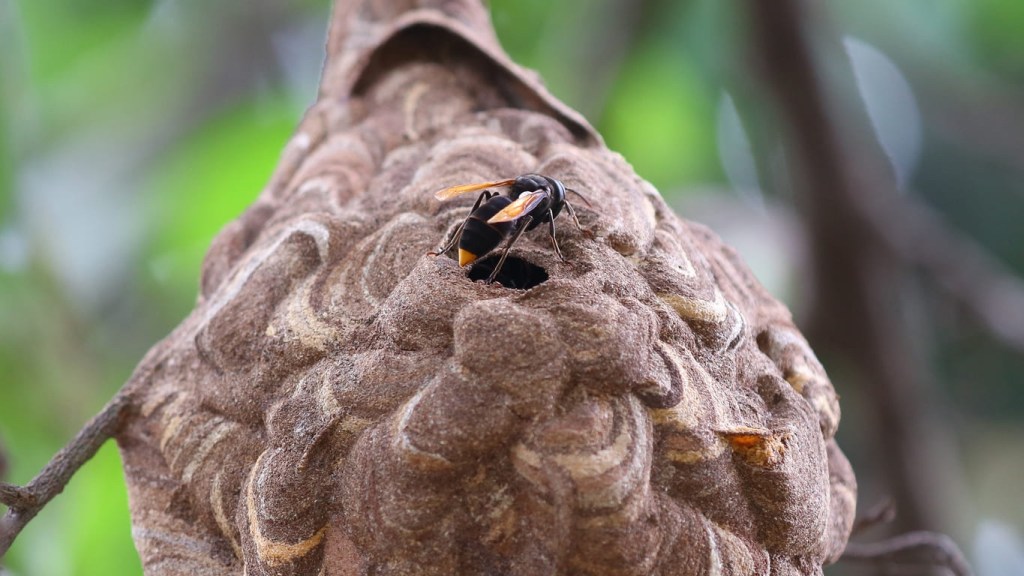
Now imagine you have Asian hornets around your garden or your beehive community? Unfortunately , many of beekeepers see the enemy too late, when the nests are consolidated and when the queen did the big job. How come ? This insect is very well known for building two type of nests : primary spring nest or so called embryo nest and secondary lates summer nest. So, if you find queen that is starting forming first nest from April to may, you have big chance to stop the annul production and break the chain. The solitary Asian hornets queen is starting with first nest at the beginning of spring, using old places and garages. The nest is not difficult to reach and that is the first thing we shall do. Reach and eliminate. If you move the queen, you move the whole potential colony of invaders. The summer nest or the second one is the challenge itself. It’s not easy to find and remove. It is not easy at all. This nest will be protected and located on the certain height that we can’t reach so simply. This also means the unbothered development of new Asian hornets that will fly around and kill our pollinators. The recommended is to search for queen in spring period so you can react and disturbe the process.
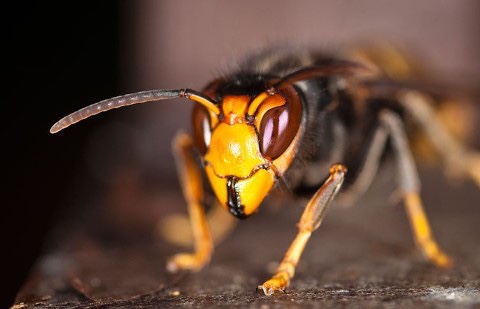
Some people have problems to recognize this hornet and some think that European hornets are Asian. It’s terrible since our European aré important for ecosystem and protected. You can’t kill them just because remind you of Asian hornets.
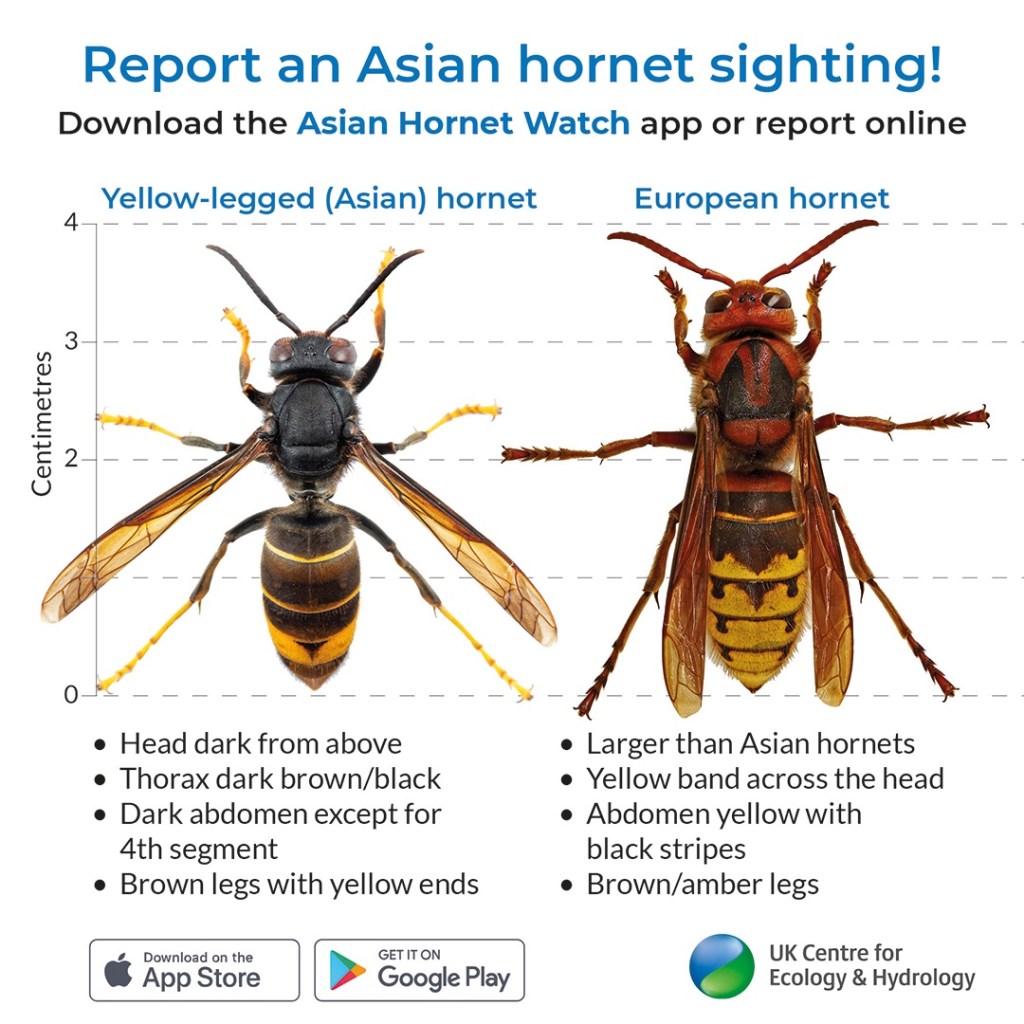
The most important part of inhibiting this species is not only killing each example but finding queen, destroying first nest and stop it from getting into second phase. The fact is that once when you find second nest, don’t try to remove it alone. They are very aggressive around nest and their aggression is nothing which can be compared with aggression of our wasps or hornets. Be careful and contact the professionals. In the spring time, you must be good observer. Once you see Asian hornet that is related to the categorization and description, you can try to locate the primary nest. It is not so far away from the queen area of flight. That’s the chance you follow her and reach the nest. They are never too far away from the flight zone, the possibility to get them is there . As soon you break the chain of destruction, you have a chance to prevent horror later. Once when all animals from both nests are adult and ready for deadly flying around, for bees to be saved is too late.
The studies report that the Asian hornets , once when they find a target , let’s say beehive, they monitor the location from the local greenery. It could be trees or bushes around your beehive group. Always be cautious and check on your bees, how they come flying, if they are disturbed or bothered and if they show some kind of anomaly. The bees under stress and attack are showing the completely different behavior. The each beekeeper who knows the temper of own bees is aware when something is out of order and system. The Asian hornets are hunting with no mercy and sometimes in group. For them, bees are delicates and they won’t give up on it.
In few years from now , Vespa velutina will be adapted and incorporated species. This means that our bees and wasps will find methods to fight them efficiently. It’s adaption and it takes time . If those insects are really 100% terrible like all stories is difficult to confirm but we must be careful and organized.
For now, it’s responsibility of each beekeeper and gardener to report sightseeing of this hornet and to invest time and resources into the fight against . It’s not easy but it is not impossible. The bees teach us that community reply is the strongest reply ever … once at time, we humans, must work together against the obstacles and must be united against the invasive species that is reshaping our ecosystem.


In recent years, ecologists in Spain have found that the European honey buzzard predates on Asian hornets, as soon as they reach its territory; revealing the potential of this predatory bird as a way to mitigate the invasion of the Asian hornet species, Vespa velutina.
The European honey buzzard is a summer migrant to a relatively small area in the western Palearctic from most of Europe to as far east as southwestern Siberia. It is seen in a wide range of habitats, but prefers forests and plantations. It migrates to equatorial Africa for European winters.
The European honey buzzard is seldom observed in The British Isles, but its presence is increasing. In Britain, the bird is protected as a Schedule 1 species under The Wildlife and Countryside Act 1981, with the occasional nests kept secret by authorities to avoid disturbances by egg collectors.
Asian hornets (Vespa velutina) are present in Britain as an invasive species migrating across The English Channel from mainland Europe. While they are not yet considered permanently established across the Britain, rapid eradication efforts and a rising number of confirmed sightings mean they are a growing concern…
The European honey buzzard is a specialist feeder; living mainly on the larvae and nests of wasps and hornets. Though, it will take small mammals, reptiles and birds. It is the only known predator of the Asian hornet. It spends large amounts of time on the forest floor excavating wasp nests. It is equipped with long toes and claws adapted to raking and digging, and scale-like feathering on its head, thought to be a defence against the stings of its prey. The European honey buzzards are thought to have a chemical deterrent in their feathers that protects them from wasp attacks.
LikeLike