
HOW TO MAKE YOUR GARDEN BE POLLINATOR’S PARADISE?
When I think back of my life , I must admit I have never had the interest for garden and gardening. It was always something reserved for old people or at least, that’s what I thought. It was hobby for people who are not me. Now, here I am, welcoming gardening and completely enjoying it. Why so suddenly? Because after all, the garden works for better planet and support the nature and wildlife so I can relate my actions as environmental awareness.
I have never taken care of any garden so this is my first own garden who I am leading and hoping to be a little peace of heaven for insects, birds, other animals and myself, afterwards. The old property owner had put efforts in setting the nice garden separated into two parts. One is in the front of house and another is behind the house. The both are beautiful but, due to the long absence of human care and nurturing, somehow forgotten and without the real story. I believe that each garden is there to make a portray of our creativity and authenticity so when you are up to set up your own garden, think about who you are and what is your tale to share with the world around.
There are some people who love perfection in garden and that is acceptable. Their garden is also telling us that nothing is spontaneous and that everything is planned, scheduled, controlled. The life itself too. You can’t find anything that is not symmetrical, out of plan or simply there . Each sample is chosen to be there, set up with deep comprehension and controlled to not be out of control. You can find clean pathways, lot of stones, grass that looks like the one on golf area and the rest of plants that are gathered according alphabet of botanical harmony. I can’t identify myself with such type of garden but I must admit it looks nice for people who are shaped to be sterile. That’s not nature , that’s nature which is adapted for the purpose of urban Homo sapiens.

Then, there are people who love English garden. I am very close to them since it is more to the wildness than any other style of garden settings. It usually means a lot of small lakes, bridges, gothic micro architecture, gently rolling lawns , the rich trees and the atmosphere of awaken English countryside.
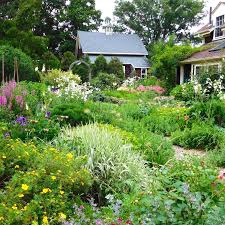
The English cottage garden is on the rise all over the world and especially in USA and Europe. It is mixture of fairytales and urban touch in suburban places. You can’t resists to it and you make something timeless for you and nature around you. There is a good reason for trend in supporting biodiversity by building habitat that works for humans and animals at the same time. Bee cities and bee gardens are highly cherished in many countries, having in mind how difficult is to keep pollinators happy and well.

So, basically, you can be artist in your own garden, choosing to play with different skills, combing plants of different colors and seasonal variations. Then, you can put birdbaths, nesting houses and bird food stations around the garden area. You can also make a kind of fence between as you use natural stones that will give a slightly difference between nature and urban parts. In different flowerbeds you can put plants that will grow together and radiate colorful joy. You can mix annuals and perennials for strong impact and summer vibes of cottage garden. The experts usually advise to combine foxglove, peonies, sweet William, Lavander, delphinium , roses, campanula or columbine. Of course , you will need also climbing plants for dramatic effects and a bit of pictorial inspiration like small and cute bridges, garden pathways and salvaged woods or tiny houses that are hidden around.

I find the English garden like a borrowed scene from Lord of the Rings and famous Shire. You know what I mean ? So peaceful and mesmerizing, for charging batteries after all madness of civilization.

That’s why I decided to go into direction of cottage garden and to make sure it is shaped to benefit the pollinators and the small wildlife. What does it mean ? I don’t clean all in autumn but let it simply be there as a shelter for many insects. Some of pollinators use it for winter sleep or later for placing eggs. I also put numerous insects hotels and I built my own insect hotels that some of them use and place new generations.

I researched which plants are good for honeybees and wild bees as well as for butterflies. You don’t need to chase them to come to you, they will come after your plants are calling them and give them safe home. I also put bird houses and birdbaths so the birds are happy and always there. Not only birds but squirrels too. Make sure you put on different trees the different food stations so the animals know where to look up for food and chilling zone. The few birds make their nests directly on the house so they fly out to pick up food and refresh themselves in garden.
It’s like an alluring corner of the planet that is relaxing me and my wild animals. Make sure that your pets don’t bother wildlife in this area so they will keep visiting or even living there, knowing they are safe and sound.
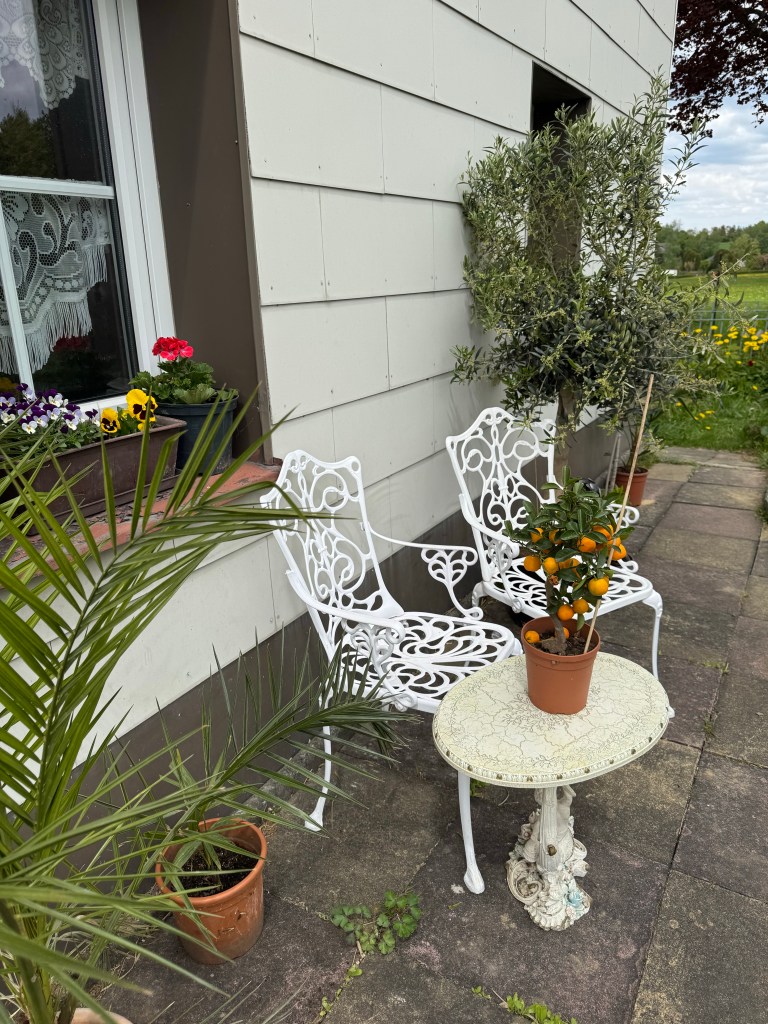
What is the most important thing is to not treat your garden with chemicals and you will keep having and seeing a lot of pollinators. The following plants are considered to be friendly and beneficial for pollinator garden: Marigolds, Milkweed, Veronicas, Mountain Mint, Sunflowers, Lavander, rose , Yarrow, Bee balm.

I am sure you will find your way to wildlife through the wind of hope and good vibes . With the sunshine , we can create the little fairytale of our own life, showing out our skills and love for nature. It’s not only for ecosystem and biodiversity but also for the sake of our souls.


 SARAH MAX RESEARCH
TO BEE OR NOT TO BEE SAID THEMALE DRONE BEE
To live, or to die? That is thequestion.
Is it nobler to suffer through allthe terrible things
fate throws at you, or to fight offyour troubles,
and, in doing so, end themcompletely?
To die, to sleep—because that’s alldying is—
and by a sleep I mean an end to allthe heartache
and the thousand injuries that we arevulnerable to—
that’s an end to be wished for!
To die, to sleep. To sleep, perhapsto dream—yes,
but there’s there’s the catch. Becausethe kinds of
dreams that might come in that sleepof death—
after you have left behind yourmortal body—
are something to make you anxious.
That’s the consideration that makesus suffer
the calamities of life for so long.
Because who would bear all the trialsand tribulations of time—
the oppression of the powerful, theinsults from arrogant men,
the pangs of unrequited love, theslowness of justice,
the disrespect of people in office,
and the general abuse of good peopleby bad—
when you could just settle all yourdebts
using nothing more than an unsheatheddagger?
Who would bear his burdens, and grunt
and sweat through a tiring life, ifthey weren’t frightened
of what might happen after death—
that undiscovered country from whichno visitor returns,
which we wonder about and which makesus
prefer the troubles we know ratherthan fly off
to face the ones we don’t? Thus, thefear of
death makes us all cowards, and ournatural
willingness to act is made weak bytoo much thinking.
Actions of great urgency andimportance
get thrown off course because of thissort of thinking,
and they cease to be actions at all.
Ben Florman wrote this modern English translationof Hamlet’s soliloquy.
SEXUALSUICIDE BY HONEYBEES
by DebbieHadley
Updated December 30, 2018
The male honeybee, called adrone, exists for one reason and one reason only: to mate with a virginqueen. He is entirely expendable after he provides this service to the colony.The drone takes his mission seriously, however, and gives his life for thecause.
How Honeybees Do theDeed
Honeybee sex occurs in mid-air when the queen fliesout in search of mates, her one and only “nuptial flight.” Dronescompete for the chance to mate with their queen, swarming around her as sheflies. Eventually, a brave drone will make his move.
As the drone grasps the queen, he everts hisendophallus using a contraction of his abdominal muscles and hemostaticpressure and inserts it tightly into the queen’s reproductive tract. Heimmediately ejaculates with such explosive force that the tip of hisendophallus is left behind inside the queen and his abdomen ruptures. Thedrone falls to the ground, where he dies soon after. The next drone removes theprevious drone’s endophallus and inserts his, mates, and then dies aswell.
[Insert}
And as the dying male drone bee falls to the groundhe cries out,
“I’d have been better off having a wank”!]
Queen Bees Really GetAround
During her one nuptial flight, the queen will matewith a dozen or more partners, leaving a trail of dead drones in her wake. Anydrones that remain around the hive in the fall will be unceremoniously driven from the colony beforecold weather sets in. Honey storesare simply too precious to waste on a sperm donor. The queen, on the otherhand, will store the sperm for use throughout her life. The queen canstore 6 million sperm and keep them viable for up to seven years, with thepotential of producing 1.7 million offspring during her lifetime, as she uses afew at a time to fertilize her eggs.
Bee Egg Development
In late winter, the queen then lays eggs in thecells of the hive, up to 1,000 in one day at the height of the season. The hiveneeds mature bees to be ready to go when flowers with pollen are emerging, butshe will continue to lay eggs until fall. Worker bee eggs mature in about 21days, drones in about 24 days (from unfertilized eggs), and other queens inabout 16 days. The hive needs backup queens in case the queen dies, becomesincapable of laying eggs or is lost because a hive doesn’t survive withoutone.
What Workers Do
In contrast to the drones, female worker bees takeon many jobs. They clean cells for eggs to be laid; feed larvae; construct thecomb; guard the hive; and forage. They can lay an egg to become a drone ifneeded, but their eggs can’t become workers or queens.
Insects and SexualSuicide
Though honeybee matingis one of the most dramatic examples of sexual suicide in theinsect world, it’s not the only one. And in the grand scheme ofthings, it’s not as gruesome as it gets. How would you like your head tobe eaten by your mate during sex like is the fate for some male praying mantis
LikeLike
Sarah’s delightful and inspiring article reminded me of the following quote by US-scientist E.O. Wilson (1929-2021): ‘Nature holds the key to our aesthetic, intellectual, cognitive and even spiritual satisfaction…’
E.O. Wilson grew up in Alabama, USA, with a profound interest in Nature; especially, as the region is so rich in biodiversity. Wherever he lived in the USA, he created beautiful gardens with his wife; specifically-designed for pollinators.
Humans began cultivating crops c. 22,000 BCE, and the earliest evidence of gardening, for both food and decoration, dates back to around 10,000 BCE, during The Neolithic Period. While the exact time of the first garden is difficult to pinpoint, the practice of cultivating plants for various purposes developed gradually over time, in different parts of the world…
As civilisations developed, wealthy individuals began employing landscape gardeners to create gardens for ornamental and decorative purposes: a form of social status symbolism. Some of the earliest examples of elite gardens with aesthetic and ornamental value can be found in ancient Egypt and Persia. Egyptian tomb paintings dating back to 1500 BCE depict gardens with lotus ponds and trees. The Hanging Gardens of Babylon, a renowned Persian garden, was built around the 6th century BCE.
Nature is the ultimate gift for the human imagination and overall well-being…
LikeLike