
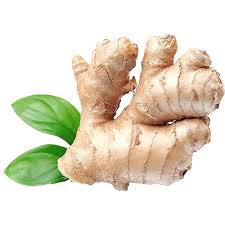
WHAT ARE THE MAIN BENEFITS OF GINGER ?
IIn the age of constant health anxiety, somehow is normal that we overlook the right path and things we really need to put attention on. We do live life that is under pressure, we are exposed to the permanent stress caused by existential rat race. What we usually forget is that balanced nutrition is the wind of change, the breakdown of self-destruction. Afterwards, we can start dealing with other indicators and try to limit them or even prevent.
Many ancient cultures knew the importance of nature in the recovery of the sick body. That is old and wise heritage of our civilization but the modern homo sapiens is too busy to stop, at least for a moment, and to accept the reality that something went wrong during our progress. We are disconnected to the nature and independent on synthetic solutions and instant pharmaceutical formulas. This is not a claim against science but just the oath to the old and primer survival instinct that some escapes from sickness could be found around us, in our biosystem.
So far, we know that good nutrition, rich with fruits and vegetables and poor with processed food ad refined sugar is the key to the long life. Of course, not to ignore that we also need tranquility, sport activity and reduced stress. Nevertheless, the great health could be built through the effective diet. What is the effective diet? No, I am not discussing about any diet that promise you to lose or put weight on, but about the balanced food consumption that is working with you and for you. This means your interest to help yourself and your own immune system. Afterall, that is your own bodyguard against all physical problems.

Did you know that gingerol has anti-inflammatory and antioxidant effects? This is the most relevant factor in the battle against free radicals in the body that are responsible for causing the environment for malign cell production. According to some studies, ginger has shown the significant success in reducing malign cell progress or even killing some of them in their beginning. Some scientists did make research about the impact of gingerol in cancer prevention or treatment. The medicine is leading the studies about the influence of ginger on the preventive of cancer or even in the possible treatment after.
The good sides of ginger are not only in the anticancer area. It is also very well known for helping against bad cholesterol:” In a recent study, taking 5 grams of ginger a day for 3 months lowered people’s LDL cholesterol an average of 30 points.” That is not the only one attribute of ginger. People who do have heart problems are supposed to take in ginger since it helps against heart obstacles, as well as against high blood pressure, lunge diseases, lower the blood sugar and help your organism to use better insulin. This information could be supported by one research from 2022:” A 2022 review Trusted Source found a significant reduction in fasting blood sugar and HbA1c in people with type 2 diabetes after taking ginger supplements. The review looked at results from 10 trials, in which participants took 1,200–3,000 milligrams (mg) per day for 8–13 weeks. The results did not suggest that ginger supplements affected the lipid profile. After 12 weeks:
- their fasting blood sugar was 12% lower
- their hemoglobin A1c (HbA1c) levels were 10% lower
- their apolipoprotein B/ apolipoprotein A-I ratio was 28% lower
- their malondialdehyde (MDA) levels were 23% lower”
The women also know the meaning of ginger in the time of menstrual pain and in the early days of pregnancy. It might help you against vomiting and morning sickness but also against usual first days of pain at the beginning of monthly cycle. If you have trained hard and your muscles are sore, try with ginger to relieve the pain. It is like a magical plant that is directly from paradise and have answers to all our health questions.

Just when you think that you would know all about our ginger, there is an additional data that put ginger on the top of natural compounds that help our brain be active and avoid struggle of possible dement and different sort of degenerative diseases. So called 6-shogaol and 6-gingerol that are the components of ginger are the one that could prevent the diseases as Alzheimer’s, Parkinson´s disease and multiple sclerosis.

The last but not the least is the antibacterial activity of ginger. It wards off the microbes and keep them on the distance. It is not an easy job especially in the time of many influenzas.
The evidence of ginger brings us to the humid tropical forests in India, that has been known for being the largest producer of mighty ginger. Indians and Chinese produced ginger as a tonic root for over 5000 years and then India exported it to the Roman Empire over 2000 years ago, keeping it as a valuable medical treasure. Not to forget that many herbal specialists back at that time have worshipped the ginger and after the failure of Roman Empire, the Arab merchants take over the spicey route and trade, also controlling the destiny of valuable ginger. It was somehow between the alchemist wonder and secret medical formula, long after medieval times and renaissance.

Nowadays, it is popular but not spoiled. There are people who like it or those who hate it. That is your choice. It could bring you to the perfect wellness but you need to let it in, our mighty and awesome ginger, your own T-cell keeper.


 SARAH MAX RESEARCH
Sarah’s interesting and informative article reminded me of why and how rhizomes first evolved on Earth…
Some remarkably well-preserved botanical fossils reveal that mycorrhizal symbionts were diverse in simplistic rhizoid-based systems. The specialised-roots evolved in a piecemeal manner and in an independent manner within several clades throughout The Devonian Period (i.e. 416-360 million years ago). During this period, rhizomes evolved cellular complexity and function…
There are quite a few wild ginger species, and the original rhizomes emerged in what is now South East Asia, around 100 million years ago. Tuber roots and rhizomes were among the flora that survived the last global mass extinction c. 66 million years ago and subsequent glacial periods, and during this period ginger species have evolved more than 400 chemical compounds, which have been related to defence mechanisms of the plant, replication and adaption to changes in climate and topography; aside issues of rainwater quality, soil quality and the chemical composition of air and sunlight.
Some botanical research is being conducted at various universities across the world on the impact of present-day climate change on rhizomes…
LikeLike