
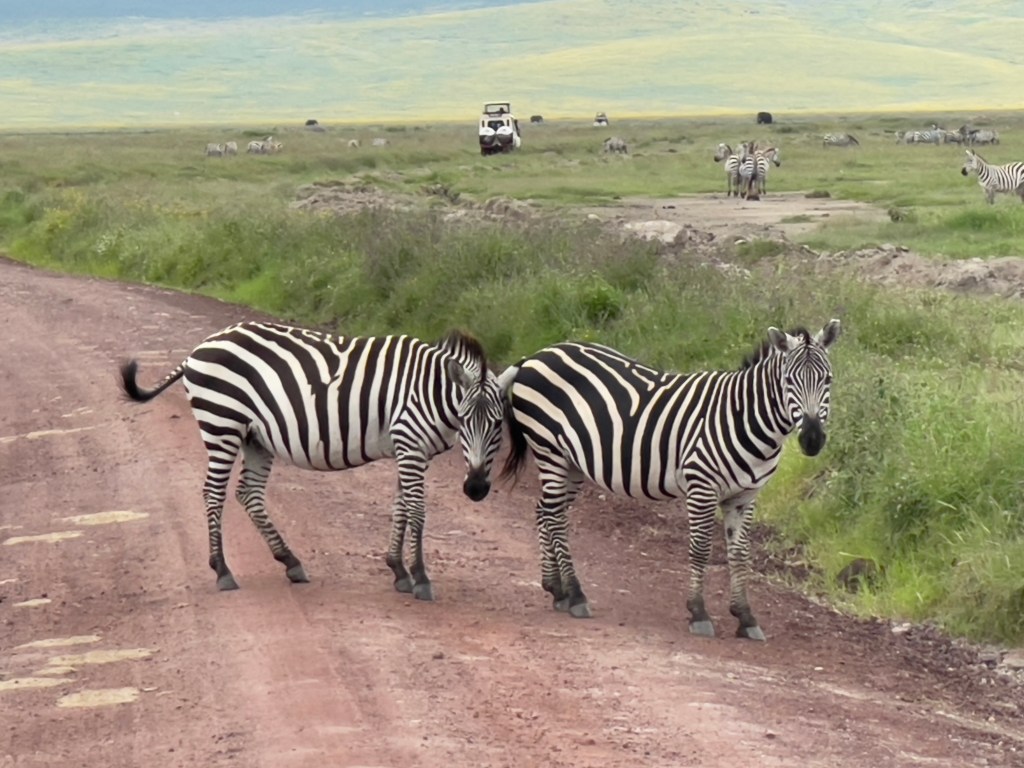
PUNDA MILIA AND THEIR SPECIAL STRIPES

I love those cute zebras but not only because of their look and authentic colour combination but also because of their life joy. Yes, they are one kind of extreme beautiful horse relative and when you see them running or jumping in the African savannah, you are lost in the thrilling atmosphere of their habitat. Those mammals know how to live life and how to enjoy in each day itself.
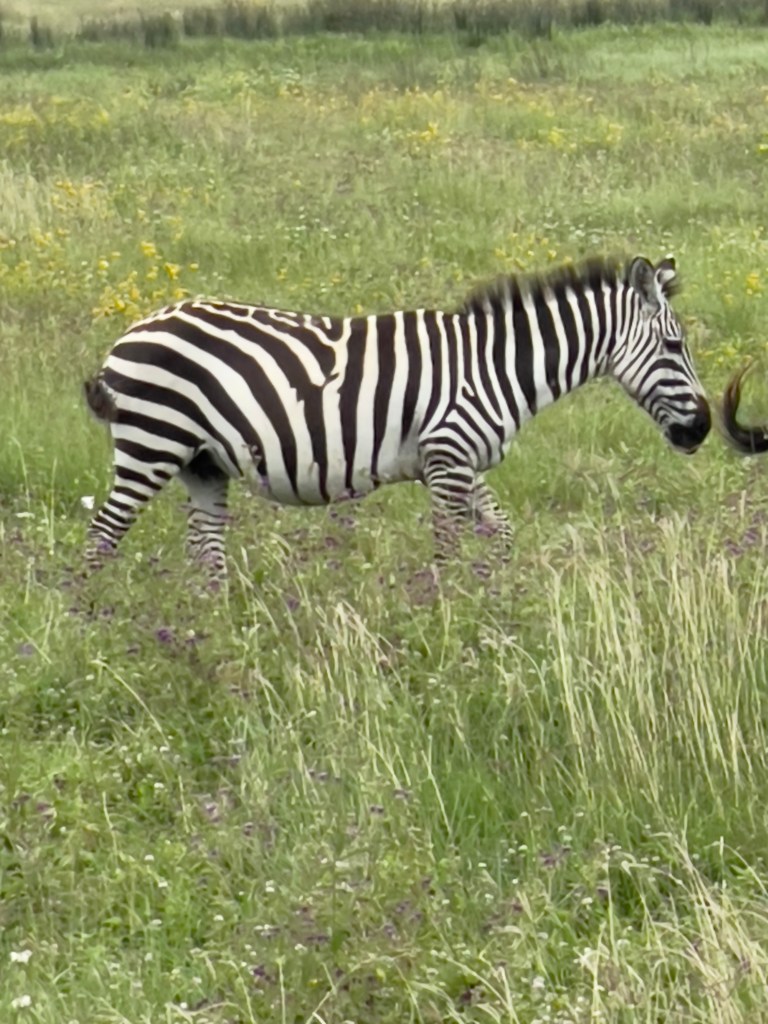
They belong to the horse family group of Equidae, together with donkeys and horses, forming their herd or rather something known as dazzle of zebras or as zeal of zebras. Each of those zebras has its own black-white stripe which could be almost compared to the snowflakes or human fingerprints. There have been many research why they have stripes and what is the purpose. At the beginning, researchers thought that zebras have their look to be protected from predators or not so exposed but the reason for their sweet look is actually the protection from biting flies. The horses are more terrorised by flies than the elegant zebras which brings us to the idea that the design has the important background. We can distinct 3 living species of zebras: the Grévy’s zebra, the mountain zebra, and the plains zebra, and unfortunately all of them are on the IUCN Red List of Threatened Species:”The plains zebra has broader stripes than the other two species. The mountain zebra normally has vertical stripes on its neck and torso, while horizontal stripes cover its legs. Grévy’s zebras are usually taller, have larger ears, and their stripes are narrower.“
The zebras are good climbers and real athletes in the animal world. They are constantly in the moving, to avoid the trap of being attacked or eaten by main predators ( lions). Sometimes when they are in the group, they are reflecting the optic puzzle, especially for colourblind lions that think that stripes are actually the grass. Beside it, those animals are pretty much survival experts and for that ability, they have developed very good communication skills. The science believe that there are 6 distinct vocalisation:” Snorts signal contentment while a two-syllable cry warns the herd of approaching predators. Additionally, they communicate through facial expressions. Zebras stretch their faces forward and put their ears forward to meet each other. They push their ears to their skulls when feeling threatened.“
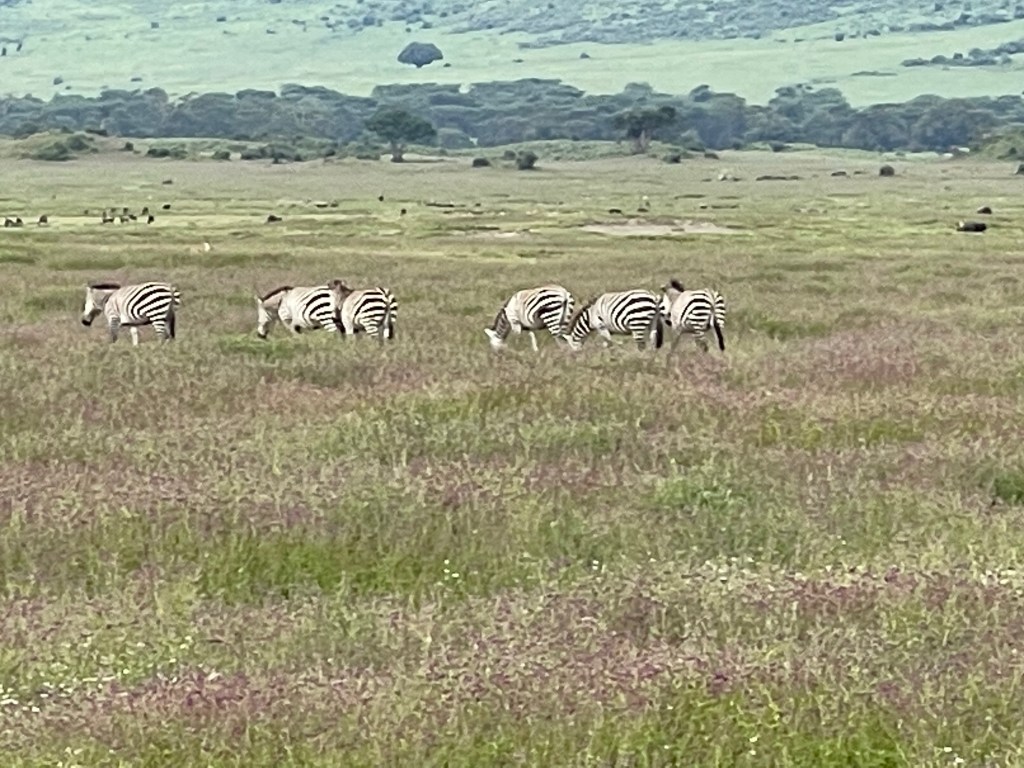
The zebras are high intelligent creature with very sensible and sharp intuition. What does it mean ? It means that they are always on lookout for a danger since they are under the potential attack from lions, hyenas, leopards, cheetahs, etc. There are many raptors lurking on them or the weakest member of the herd. They can be careful or run away or even push together the enemy, biting or killing. Do not underestimate the kick of angry zebra. It is so strong with 3,000 pounds of force that could kill a grown up lion. The one fascinating thing about them being so emphatic among themselves is that they will never leave the injured member but form the circle around it and protect :“A male zebra is called a stallion, a female zebra is known as a mare, and baby zebras are called foals, although sometimes young zebras are known as cubs. Also, to confuse things even more, a baby zebra is called a filly if it is female and a colt if it is male.”

Did you know that zebras have been bred with other animals from the same family? This has been mostly the horse or donkey and it should have helped the zebras to get better immune system. Those zebroids are known as zedonks, zorses and zonies.

When the foal is born, the mom zebra will keep it away from all other zebras so the cub could be able to recognise her scent, voice and look. The little zebra is able to stand after 20 minutes and after 40 minutes, the cub is capable to run. That is all about existence and surviving the daily risks. With one toe on each foot, the adult zebras could run up to 40 mils per hour ( 65 km/h) which is amazing skill, one of many they have. The good runners and climbers, they are constantly on move, searching not only for fresh water and food but also escaping the enemies on the road. When they sleep, they do not lie down but sleep standing up

Nevertheless, these remarkable fellows are pretty much endangered. The Grévy’s zebra is the first that is highly endangered with only about 2,000 remaining individuals. On the other side, there are mountain and plain zebras that are also under the environmental risks. Do you know why ? Because of humans, of course, as always. Here we come again to the point that the human race has no reusability for the wildlife and this Planet. They are producing themselves with no control, destroying the biodiversity and rare animals and their habitat, hunting for sport or pleasure. That is NO GO. When you think that those animals would be endangered by natural enemies, you would be surprised since the nature has regulated all and each creature has its role. The problem is with humans who don’t know their borders and rules to follow. They mess up everything and even if they don’t kill the animals by pure purpose, they cause the weather problems or ecosystem challenge that ruin the multifunctional face of nature. As long as we overstep and play Gods on the scene that is not divine, we will risk to loose all what is given us to take care of. We have to start with education and to learn that there is no second chance, we need to understand now and to react now, before it is too late, before those black-white magical horses aren’t lost.

I saw them this year in Tansania and it was unforgettable experience in the woodland of Serengeti. They have been so happy, almost like they forget humans and their sins. I want them on our Planet forever. They need to stay. We need to keep them. We must do it.
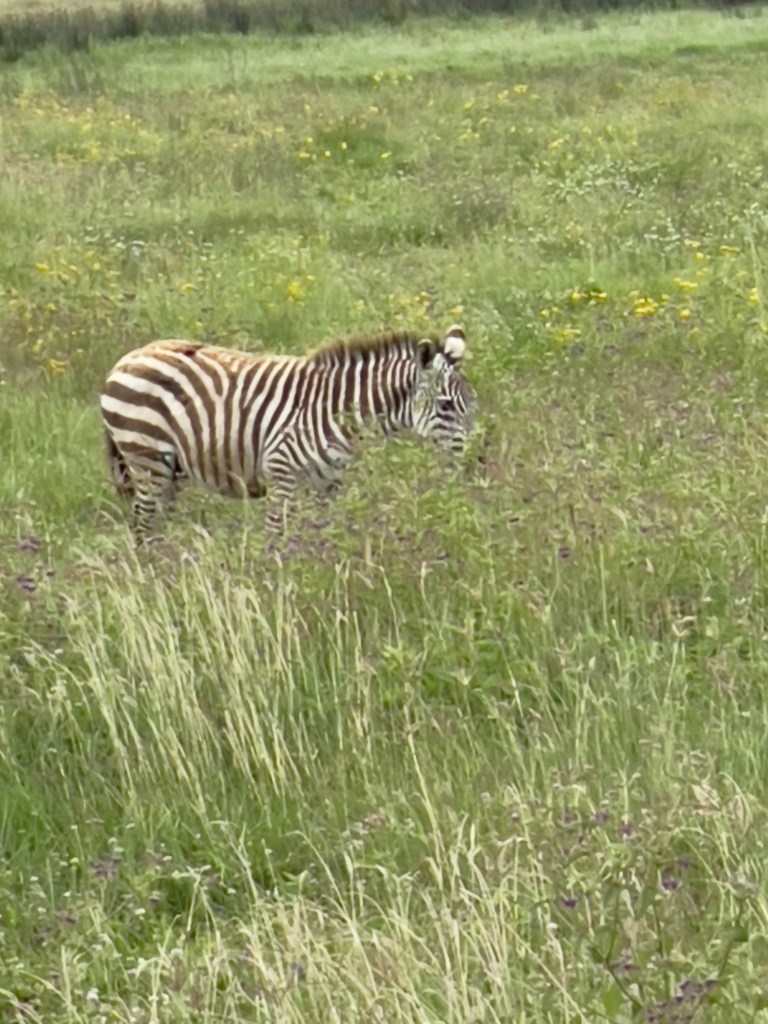


Sarah’s delightful article reminded me of how the evolution of stripes on zebras continues to stimulate debate among scientists…
We know that oceans emerged on Earth c. 4 billion years ago and this gave rise to single cell organisms, eventually. From this, evolved multicellular organisms with diverse exterior appearances and physiological dynamics. The evolution of all organisms on the planet being influenced by their immediate ecosystems…
There are thousands of species of marine organisms that developed stripes for various reasons, over the past 600 million years; aside DNA severance through consequent mass extinctions. Presently, clown fish represent a definitive example of marine life developing stripes in order to blend in with an immediate biome, be symbiotic and acquire camouflage safety from predators.
In all probability, zebras developed stripes for multiple reasons, as other organisms did over the past 4 million years of the existence of zebras.
There are six main scientific theories of why zebras possess stripes: the fly-protection hypothesis stipulates that the stripes deter hematophagous insects (i.e. blood-sucking organisms like horse flies). The crypsis theory postulates camouflage as the purpose of the stripes. The thermoregulatory hypothesis states that the stripes help control the body temperature and metabolism of the zebra; although, this theory is significantly-debated. The basic theory of confusion for predators lacks holistic and absolute data to be proven correct. The social function theory stipulates that the stripes are a form of identity recognition among zebras, as well as for social bonding, expressing visual data of overall health for procreation, etc. Also, there is an aposeematic hypothesis that postulates the stripes serve as a pattern of warning to both predators and rival zebras.
Zebras are an example of how terrestrial atomic and molecular life forms on Earth develop specific exterior body patterns for possible diverse reasons.
LikeLike
Sandra you’re as incredibly talented as you are awesomely stunningly gorgeous
LikeLike