
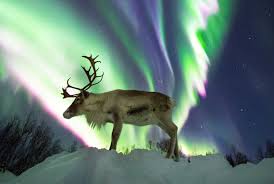
THE MAJESTIC SNOWY DEER AND THEIR ROLE IN WILDLIFE
“Santa knows Physics: Of all colors, Red Light penetrates fog best. That’s why Benny the Blue-nosed reindeer never got the gig.”
– Neil DeGrasse Tyson
We are slowly stepping into the most beautiful time of the year. The White Christmas might come if we keep on celebrating winter beauty and hope to catch the glorification of hope, love and light. Many people love the Christmas atmosphere and hold on it, because of the cute innocence of the childhood. Santa Claus is such a lovely grandpa and he cant be bad to us. Even if we are adult ourselves, we need to keep on life the old, good tradition and to tell our children the nice campfire stories and let them believe in some world full of magic.

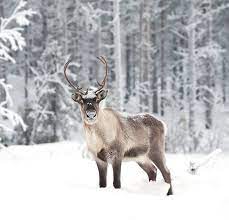
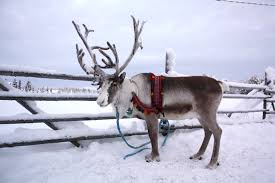
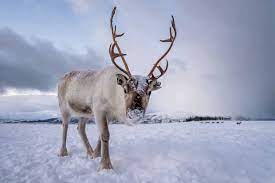
How could this be possible without sweet reindeer ? Everyone knows Rudolph and his shiny nose but not everyone knows that reindeer are pretty interesting beasts that are located in North Europe where they are known as reindeer and in North America, where they have been called caribou and only reindeer, if they are domesticated. So, yes, we are talking about the same animals with the different purpose. One are wild and another are in the human service and both belong to Rangifer tarandus, the deer family. Here is very funny the fact that both male and females have antlers which is unique since another deer members have antlers only if they are males. Not only that, their antlers are one of the biggest in the deer category. The boys have up to 51 inches ( 130 cm ) and girls up to 20 inches ( 50 cm) long antlers. Thats why they have been hunted, unfortunately, because humans see only profit and interests in everything.
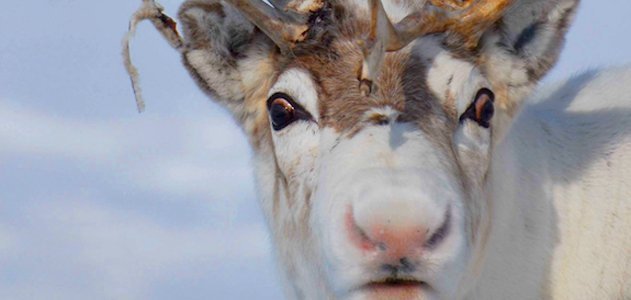
Horns are never shed but antlers fall off and grow back larger each year. Male begin the antler grow season in February and the female in May. They both finish growing of their antlers at the same time but shed them at different time of the year. Male reindeer looses it in the late autumn and live without them by the spring while female reindeer keep them through the winter until the babies are born in the spring period. Their hair that is covering from nose to the bottom of their feet ( hooves ) might look amazing and cute but actually has the mission of protection against frozen ground, ice, mud and snow. Their nose is also covered by hair, great sniffer and filter against cold air to get into the lungs. Above all, it is a kind of red colour while the blood is circulating regularly. It doesn’t surprise that their good nose help them find food under the deep snow, locate the danger, especially keeping in mind so many natural predators, including humans and industrialisation and los of habitat. Their diet is based on mosses, herbs, trees and during the cold months, they focus on reindeer moss and fungi.
Did you know that the word reindeer has a viking background ? We shouldn’t forget that old tribes and people of Arctic and Subarctic region used them as domestic animals for years. The norse origin of the name means hreinn or deer. In the U.S. the name caribou has actually the French origin and it is something like snow shoveler.
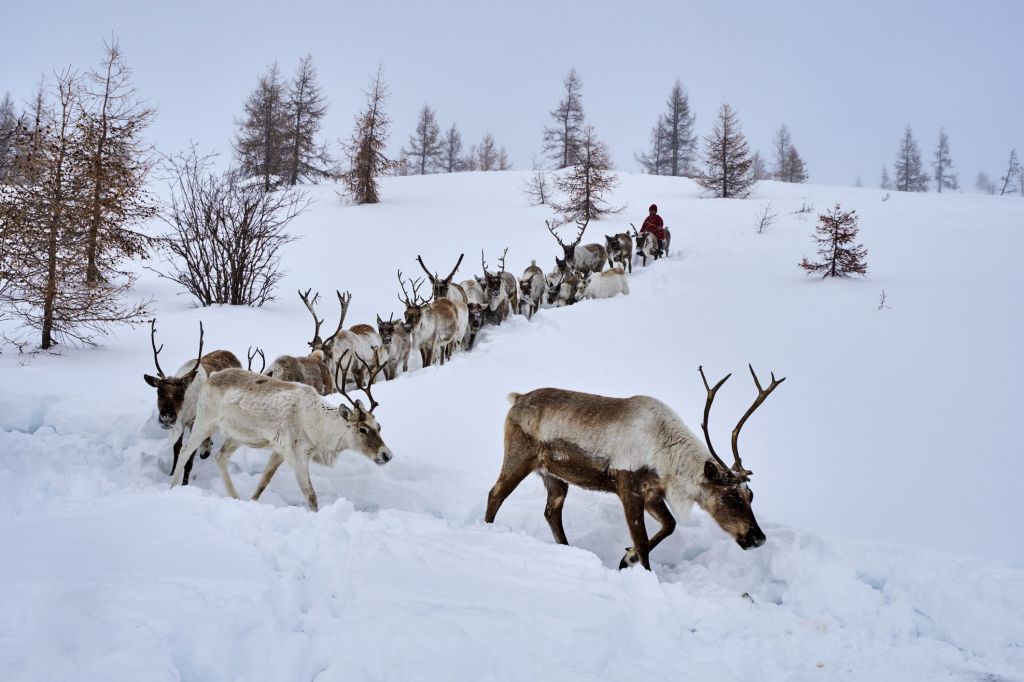
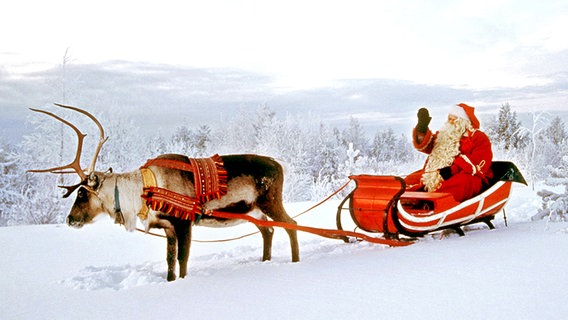
They are very social animals that live in groups or herds that consists of 10 to a few hundred. Sometimes in awaking spring time, they build the super herds from 50,000 to 500,000 animals. That make them pretty much migratory mammals that use to travel for food up to 1,000 miles. However, their adoration among people started with the Rudolph the Reindeer linked with Santa Claus and magic of Christmas : “Rudolph the Red-Nosed Reindeer began guiding Santa’s sleigh in 1939, when Robert L. May wrote the story of ´the most famous reindeer of all´ as a Christmas coloring book for his employer, the department store Montgomery Ward. The company gave away the coloring books as holiday gifts to children to entice their parents to visit and shop at the store. In 1948, May’s brother-in-law Johnny Marks made the story into a song. It was featured in a cartoon shown in movie theatres, but wasn’t released as a stand-alone recording until 1949 when ´The Singing Cowboy´ Gene Autry recorded the song and its popularity soared. Rudolph the Red-Nosed Reindeer is one of the biggest-selling Christmas songs of all time. “
Some scenarists believe that reindeer are the only mammals that can see ultraviolet lights. This is very painful for humans because it cause the snow blindness and for reindeer is a survival formula. This remarkable visual ability is actually the tool of adapting on the extreme arctic conditions:“Lead researcher Professor Glen Jeffery said ´We discovered that reindeer can not only see ultraviolet light but they can also make sense of the image to find food and stay safe. Humans and almost all other mammals could never do this as our lenses just don’t let UV through into the eye.´”
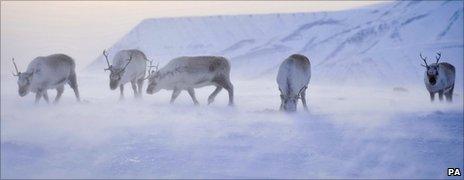
Keeping in mind all those facts and research thoughts about reindeer , we cant be just amazed but also fascinated by these animals that make the clicking sound by the walking to stay together in the blizzard. They are so intelligent but also skilled, by the nature, to deal with the risks and challenges of the biosystem they live in. For hundred of years, they have been adapting creatures. Some of them make it to be domestic animals and live in captivity up to 20 years, helping people. Some of them stay free and wild, roaming the tundras, provoking the gold eagles and wolves, spreading the traces all over the winter-land, giving all they can to survive.
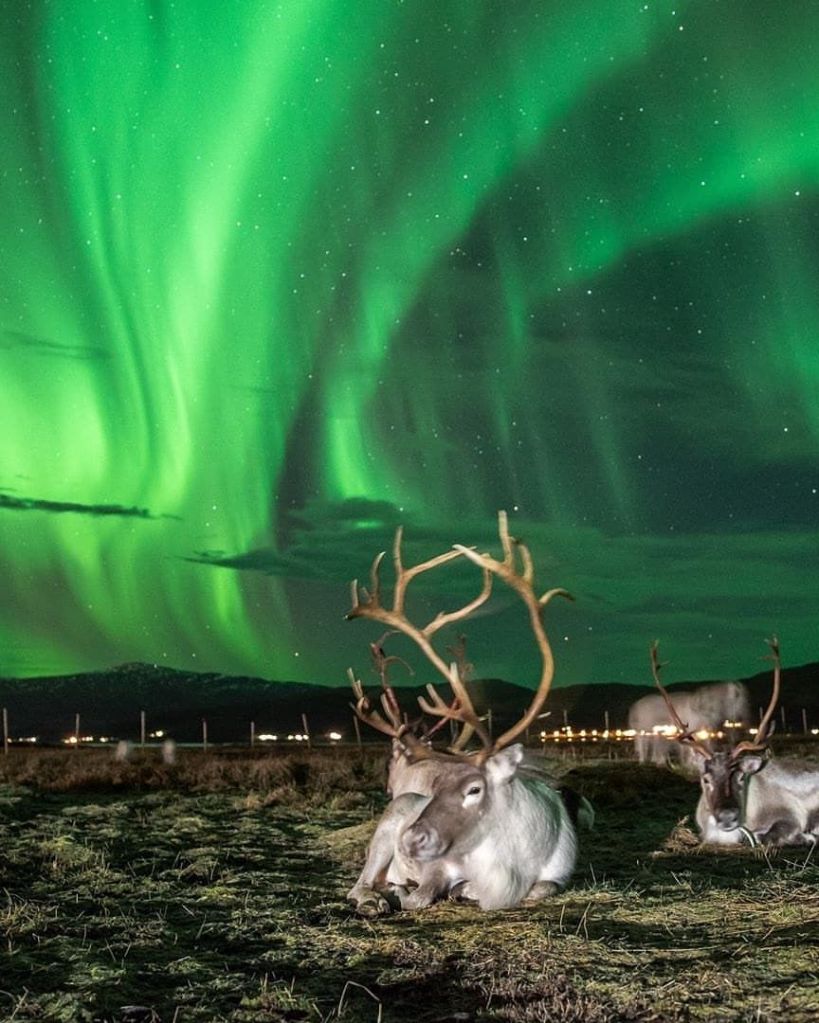
Their beauty is unique and autehentic but not only because of Santa Claus and his famous Christmas reindeer gang: Rudolp, Blitzen, Comet, Cupid, Dasher, Dancer, Prancer and Vixen. Also because of their stable role in the changing phases of evolution in the wildlife and their super powerful attitude to survive in spite of all danger.
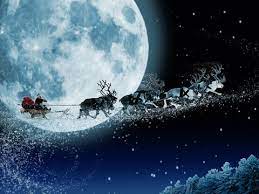
Next time when you see them helping our Santa Claus, don’t be suprised but enjoy the magic of them. Maybe you will be the one who could experience the beautiful moment of tale, sitting in those slides and flying over the sleepy winter city, with Blitzen or Cupid. Who knows.


 SARAH MAX RESEARCH
Sarah’s delightful and seasonal article reminded me of the linguistic debate over the evolution of the mythology and legend associated with the reindeer of Saint Nicholas…
In prehistoric periods, reindeer species existed in much of Northern Europe, but extensive hunting by humans pushed back into safer havens of Scandinavia. During the 1700s, there was a great deal of immigration of people from Northern Europe to North America, and these different cultures and peoples brought with them their folklore, etc.
Traditionally, Arctic peoples discerned the reindeer as symbolic and iconic of creativity and safe passage across land. Combined with the ancient legend of Saint Nicholas (270-343 CE) and Mediaeval Christian observances of Pagan aspects of The Christ Mass, reindeer would become associated with Saint Nicholas in the following centuries…
The authorship of the anonymously-composed poem entitled ‘A Visit from Saint Nicholas’ (1823) in New York City continues to be debated today, but the appellations of the reindeer were drawn from colloquial Dutch names in New Amsterdam (i.e. Manhattan). The original poem used incorrect spelling, as it was composed by an Anglo-Saxon author without linguistic ability in Dutch. The names would be corrected by printers, in subsequent editions.
The poem was popular among the then Middle Class children of New England: the poem itself had been inspired by children of the author. By the late-1800s, advertising and products, etc., associated with The Christ Mass were expanding across North America and Western Europe, expeditiously. By the early-20th century, the reindeer had become well-recognised by children across the Christian world.
Though, keeping in mind that The Antipodes celebrates The Christ Mass during the summer, and so images of snow and reindeer are surreal, there.
LikeLike
What amazes me is the growth of the antlers and their strength. But when it comes to getting rid of them, they just shake them off. Has anyone researched how the male deer manages it to do that?
LikeLike