
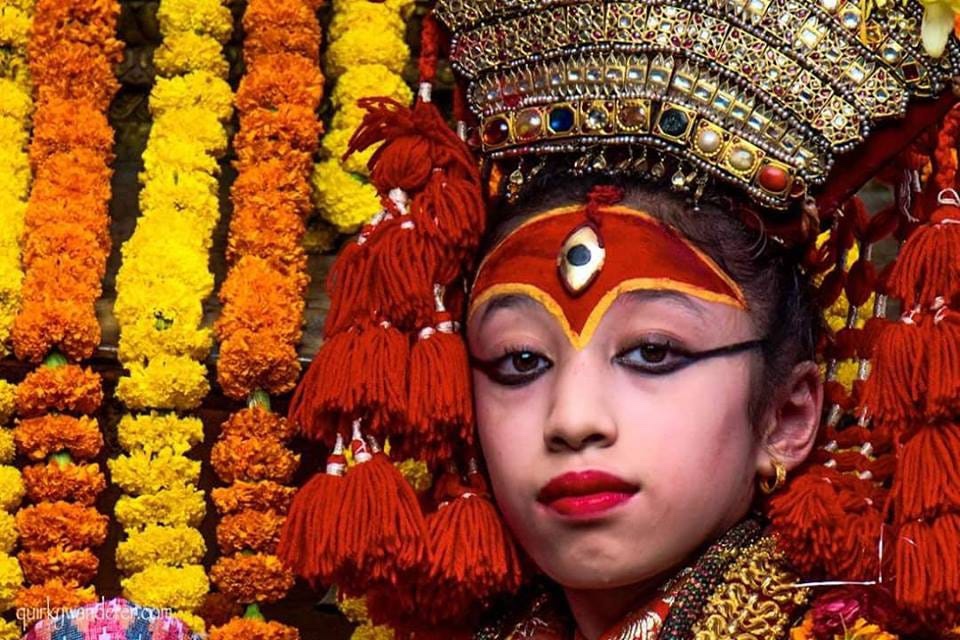
WHO IS KUMARI?
The religion is sometimes cruel because it is practicing some totally opposite rituals, like sacrificing life for death or replacing mortality by immortality through the strange ceremony. I have never been into religion but I love spirituality since it is up to us, leave us right to be free as ocean.

No matter how many religious directions we have in the world, somehow I am always amazed by finding out that out there is some new custom that I have never heard about. This is how I come close to the destiny of little KUMARI, the living Nepal’s goddess. No, I have never been in Nepal but my friend is actually visiting this child’s goddess and he shared with me his impressions, in tears. Then, I wanted to follow the little steps of those girls who are worshipped as goddess, when the time is right. Their life is not easy and if you ever thought that goddess enjoy in paradise, you will be surprised that reality is far away from it. Can you imagine how difficult is for those beautiful girls to pretend to be goddess in the world of adults who created fantasy for themselves and invented rules for innocent girls, Theater to perform.
I have a big tolerance for each and every kind of religious dimension as long is it doesn’t step into the human or animal rights. The whole tragedy about animals that are sacrificed or children that are abused for the sake of some Gods, taught me to be free thinker and question everything so here I am , asking myself why Nepal is embracing, for so long , the worshipping of the KUMARI DEVI. Not many people are actually familiar with the institution of the child deity. However , the KUMARI is the only living goddess that is cherished by both Hindus and Buddhists. This is especially popular in the Katmandu Valley. So, who is this little goddess ? The name itself means VIRGIN. This means that the goddess is chosen among very young girls, pre- pubescent girls that are radiating the spirit of Goddess Kali and Taleju.
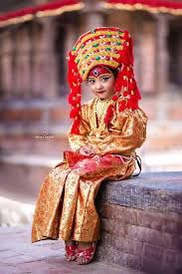
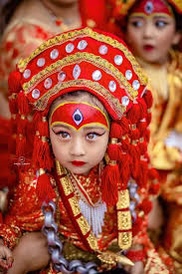
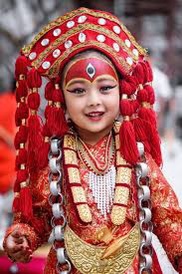
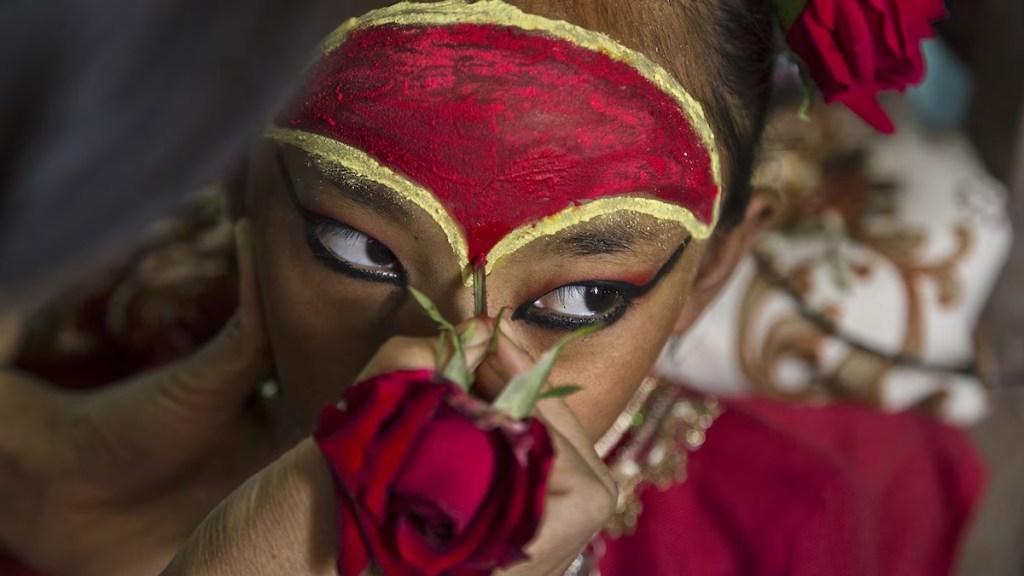
The girl that is chosen to be a royal Kumari of Kathmandu has the specific rules to follow and to forget her previous life, drawing into the new and serious world of goddess. The life out of palace is only allowed due to the special moments and others come to her , for blessings. Not only the folk who believe to seek her blessings and get fortune but also the government officials and important persons of the land. The girl- goddess can’t touch the ground with her feet so she is always carried outside by her caretakers. Knowing to be dressed in red clothes with the fire eye on her forehead, she also can’t smile or show any kind of emotion. The glimpse she has is the touch of goddess herself and the girl is only emanating the divine. No mortal attributes are accepted but only the vibes from paradise that is shared with people who pay everything to just come and see her.
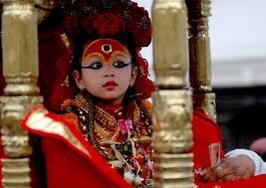
The process of searching for goddess is not easy and has the certain timeline. The girls that are in criteria are those who are with good health, no scars, no fear and with exceptional beauty. Once the most beautiful has been found, there is second election and examination for so called Battis Lakshan, 32-body perfections test. This means the following : “Body like a Banyan Tree; Eyelashes like Cow; Neck like a conch shell; Chest like a lion; Voice soft and clear as of a duck; Same horoscope as of the King; Sign of Serenity and Fearlessness ; Black Straight Hair and Dark Eyes; Delicate and Soft hands and feet; Thighs like those of a deer; Small and moist tongue. The children also must not be scared of blood and masked man. Every child is shown several sacrificed buffalo and masked men dancing on top of the blood. If a child shows signs of fear, she is deemed not worthy of Goddess Taleju’s power. The girl that shows courage amidst the blood and dancing is then selected as the next incarnation of Goddess Taleju.”
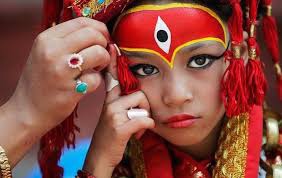
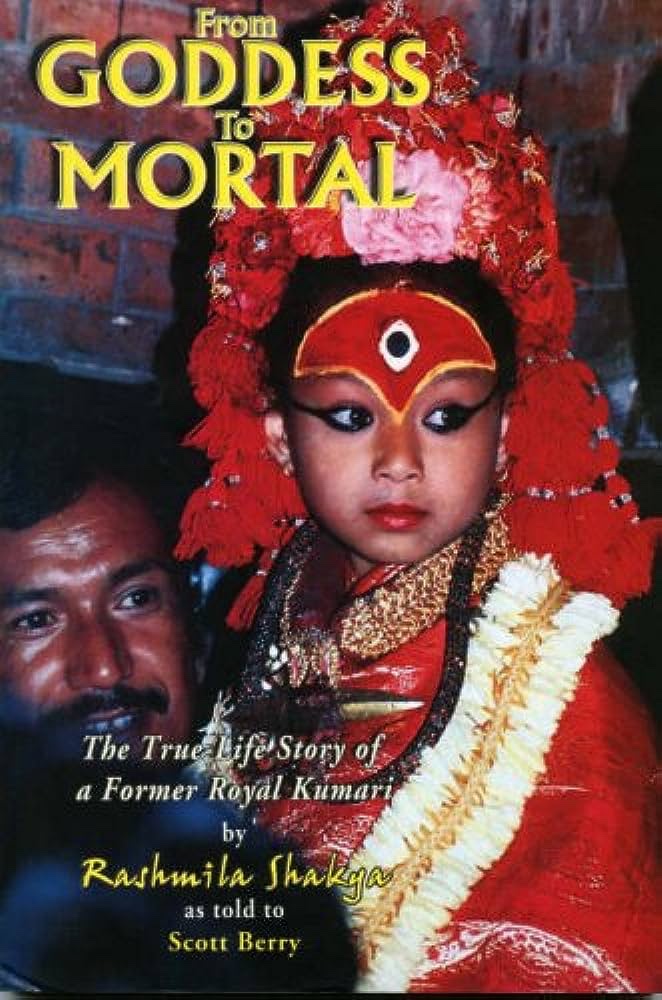
The child goddess has this title as long as she is pure. This means from the age of three when she leaves the parents house till the first menstruation or even earlier, if she has some cut and looses a bit of blood. This means , according to local belief, that the girl is not divine anymore and that the spirit of goddess is gone. The life after goddess age is a difficult for all those young souls that lost everything despite of fact that she had almost anything they want. They didn’t have their childhood. It is simply stolen and not any god of the universe can assure me that this is good, divine or awesome. The stories after immortal life in the palace of the young girls that couldn’t really walk because of their weak musculature and lack of education are numerous. Rashmila Shakya opened the public discussion with her book “ From Goddess to Mortal” narrating about her time as Kumari. The world witnessed the child rights or the absence of them. After this being highly targeted and questioned from the worldwide organizations for children well-being, so Nepal accepted the conventions about the children rights and the ex- Kumari have been given right and scholarship for education after. Nobody has ever asked the ethic meaning of this practice, even not the all ex – Kumaris but they asked for more rights and life for those girls. One day, they will be just girls after goddess period and they must have capability to live in real world, dealing with mortal demons.
In the age of artificial intelligence , we still fight with the residuals of primal instincts, survival talents for pleasing gods and their moods. How long that will be acceptable in the world that is adapting on everything with no rebellion? Nepal is a great place with mesmerizing nature and people as well as customs but there are still some little girls that do not have their toys, their sunsets and their childhood. Being immortal is not always great escape.


 SARAH MAX RESEARCH
Such an interesting article, Sarah ! I have learned so much about this topic thanks to your article !
No child should be deprived of his/her childhood for any reason !
LikeLike
Sarah’s informative and interesting article reveals parallels in human societies (e.g. concept of the virgin in Christianity): ancient institutionalised-religion was established to control human and natural resources. A more recent example was Queen Elizabeth I (reigned 1558-1603), who took on the guise of ‘The Virgin Queen’ to implement and sustain a formidable religious control over English commerce.
In the case of Nepal, the virgin concept reaches back to c. 600 BCE, when the region came under the polity of a prince who embraced Hinduism and opened the path for Buddhism, later on (c. 4th century BCE). There is not supposed be gender reference in Hinduism and Buddhism (i.e. duality), but Nepal’s various ancient kingdoms were all patriarchal.
As Sarah mentions, the 21st century CE is The Age of AI, but ancient religious concepts remain intrinsic to specific societal controls…
LikeLike