

THE ESCAPE ARTISTS AND MEMBERS OF SAVANNA TROOPS
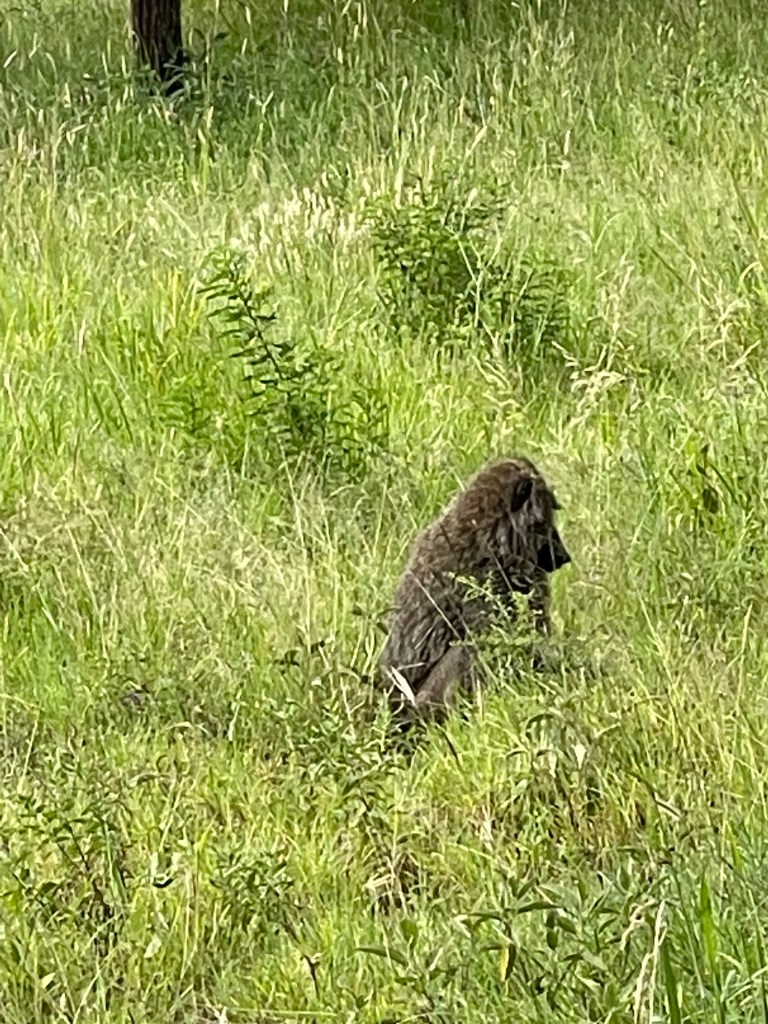
If I say that I have always been impressed by baboons, you wont believe me. I love all animals but I am not big fan of monkeys. There is no specific reason for it, it might be only because they are too much human-like but baboons are some kind of aliens, authentic example of beautiful fauna, wonderful type of primates that look through you.

I saw them in Africa, during my visit of Serengeti. They were all over but nobody was really interested in them but me. The ranger was surprised that I like them since they are known to be scary and avoided by people. Some use to say that they are a nightmare for local farmers because they ruin crops and agriculture but indeed they are very interesting and trilling animals. In science, it is known that there are 5 different species of baboons and all of them are located in Africa and Arabia. They simply love savanna habitat rather than rain forests surroundings and they belong to the Old World Monkeys and don’t have gripping tails. Four baboon species out of five (i.e., chacma, olive, yellow, and Guinea) are known as the savanna baboons. These are known to form large troops that have complex structure and governing body. Nevertheless, those monkeys can climb the trees to eat, sleep or entertain:”A fifth species, the hamadryas baboon, lives in the hills along the Red Sea coasts of Africa and Arabia. These cliff-dwelling baboons disperse to forage during the day and reconvene in much smaller groups at night.”

Their social behaviour pattern is a great matter for scientists who research them. You may see them sharing food, participate in grooming or nursing. Those animals cultivate social connections and relations so they also form the special language of communication among themselves:“Over 30 distinct vocalisations including grunts and screams are used in addition to a plethora of non-vocal gestures such as shrugging and lip smacking.”Beside it, they work on family ties very well. The mother and its infant bond is unique. The mom will take care of baby as long as that is possible and be very caring and attentive of baby’s needs. Once when the young baboon is a bit more independent, could play with others but still monitored by mother. Somehow, their family sense is similar to the humans. Not to mention that their daily routine and schedule is almost copy and paste of ours. Usually, they wake up around 7.30 am and they gather all before each of them is going for fund hunting. The day will be used for work ( forage for food) , resting, grooming, nursing and communicating. At night, they go to their shelters for night sleep.

Those alluring mammals have strong teeth and claws but they are actually omnivore which means they like more vegetarian food than meat. Only sometimes, they prey on insects and small birds but mostly, they are happy with fruits and crops. This doesn’t mean they aren’t a prey themselves. It is stated that painted wolves attack baboons and see them as a menu, when nothing else is available. What is even worse, those African wild dogs like to attack and kill baboons and let the head as a ball for the youngest for playing. The baboons learnt how to fight back and protect themselves so they aren’t an easy prey anymore as it was at the beginning .

They have cohabitation with people for thousands of years. Some researchers found the skull of South African baboon that is 2 millions years old. If we look in the mythology of Egypt, we must see how admired those animals have been through the history. Their intelligence has been an inspiration and doesn’t surprise that the baboon was the symbol of god Thoth, the represent of wisdom and adviser of God Ra.
They are very remarkable monkeys with brilliant minds, escaping strategy and clever approach to the obstacles. However, they are paying too much for their skill and talent for troubles and conflicts. The African farmers hate them and hunt them so we could say, as always, humans are the worst enemies of the baboons. Not only because they fight with them and against them but also when they hunt them, they use them for trade, trying to sale them to pharmaceuticals companies for animal testing. Their presence in research laboratories is on rise. Usually, the wildlife foundation do all what they can to bring out of testing the gorillas or chimpanzees but the gape is now fulfilled with baboons that suffer in the silence and mostly invisible.

The one more fact that makes them so specific is their red cheek: “Because baboons sit square on their rumps instead of squatting like some other monkey species, their butts are covered with hairless pads of calloused skin called ‘ischial callouses’. This skin has no nerve endings and provides a permanent cushion for the baboon. There is also a bit of a ridge on the pads which allows for a secure seat on a thin branch. Baboons often sleep in an upright seated position on a tree branch, and this calloused area is believed to protect them and keep them secure in the trees. Both sexes in all baboon species have these calloused areas, and the pads will vary in color. The males of some species have red butts occasionally too, in times of heightened aggression or during mating.”

The baboons could be very unfriendly animals for the locals that live on the agricultural goods but we shall not forget that the land belong to all of us. The humans need to learn to share the planet and not to behave like the last conquers. Those animals have all rights to be here and not to serve us in some of the darkest laboratories of Homo sapiens failed compassion. Think of it before it is not too late.


 SARAH MAX RESEARCH
Sarah’s interesting and informative article induced me to recollect theories on the evolution of the word ‘baboon’…
Most etymological lexicons reference Old French ‘baboue’ (i.e. grimace [related to aggressive countenance of baboons when agitated]) as the origin, but the ancient Egyptian myth, which Sarah refers to in her article, had the appellation of ‘Babi’: the ancient Greeks and Romans had different words to describe primates (e.g. simia), but did not employ the word ‘Babi’.
Broken down, the ancient Egyptian hieroglyph ‘Babi’ equates to ‘Lord of the Apes’, as it was seen to be the most aggressive and dominating of the primates known to the ancient Egyptians. Eventually, Classical Arabic replaced Ancient Egyptian hieroglyphs, and the Arabic word for the primate is ‘babun’. This was in the 7th century CE, when spoken-Arabic was blended with Syriac, Bedouin and local dialects in Egypt.
Ostensibly, Mediaeval French merchants, etc., in North Africa (c. 10th century CE) came to know the regional word for baboons.
LikeLiked by 1 person
Fantastic photos, you have had some amazing adventures….
The continued exploitations and torture through animal testing, is sad and barbaric; unnecessary at this point of human evolution, known knowledge and technology. There is no justifying a life of horror and pain forcefully put upon one species, in order to benefit another.
LikeLiked by 1 person