

THE NORWEGIAN SECRET OF ETERNITY
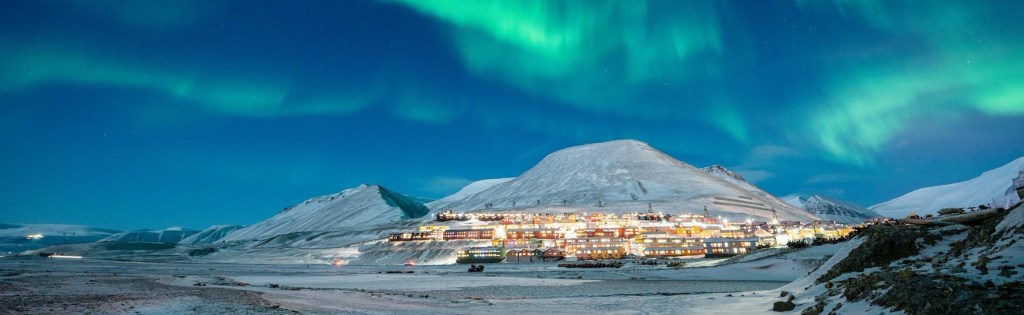
We all know that the Scandinavian countries have very unique nature and rich wildlife. Each land has its own remarkable attributes and once you are there, it seems you have been always destined to end up there. It’s paradise and only if you are truly in love with raw nature and wild fauna, you will find full enjoyment. Norway is one of my must see goals, my secret travel dream, one mysterious destination that my soul is aching to visit.

What is so special about Norway? I mean, it’s all but above all, polar experience that keep us live the Nordic fairy tale. I investigated a bit the meaning of midnight sun and polar nights and I came to the point that my interest is to get to the Svalbard, the archipelago that is known for the longest period of darkness. It is stated that the sun doesn’t rise from late October till the mid of February. This is some kind of twilight zone with mixture of majestic colors that merge in one, from violet through the deep blue and purple, making almost a disco ball over the snowy landscapes.

This part of the Earth is known to be locked into the polar nights dancing show that starts between November 14th and January 29th. Here is also very important to spot a difference between dark season and polar nights. They are both phenomena and attractive to nature lovers and photographers but they have some slight contrasts. The dark season is shortest close to the polar circle and the longest as you come near to the North Pole. That’s why this archipelago has the longest dark season, about 113 days of darkness in Longyearbyen. This is also the reason why the most spectacular Polar Nights are just happening here because the glimpses of light embraces the darkness and that is always when on the northern hemisphere , the moment when sun never rises past 6 degrees.

So, what people are doing over there when there is a dark season? It is a perfect moment for tranquility indoor but also for outdoor adventure. You wouldn’t believe but the city and the whole place is know for amazing hiking possibilities. The snow settings that follow usually the dark period are enabling the mystical enjoyment in wild nature, ice formation, ice caving and glacier visits. Some of those cool activities are also optional with dogs sleds and night wandering and wondering. You are hunting Polar Nights and you also try not to be scared or hunted by beautiful polar bears that are walking around the city and looking for their food. Of course, the people are safe since they can wear basic weapon to shoot in the air and keep wild animals away. What I find a bit controversial is a fact that you can’t die simply there. I mean, you sure can die but you won’t be buried there. Due to the climate situation and freezing background, the bodies can’t be decomposed. Beside it, here is no serious hospital and not the one that can help you with pregnancy and child birth. For those occasions, you must travel to Norway.
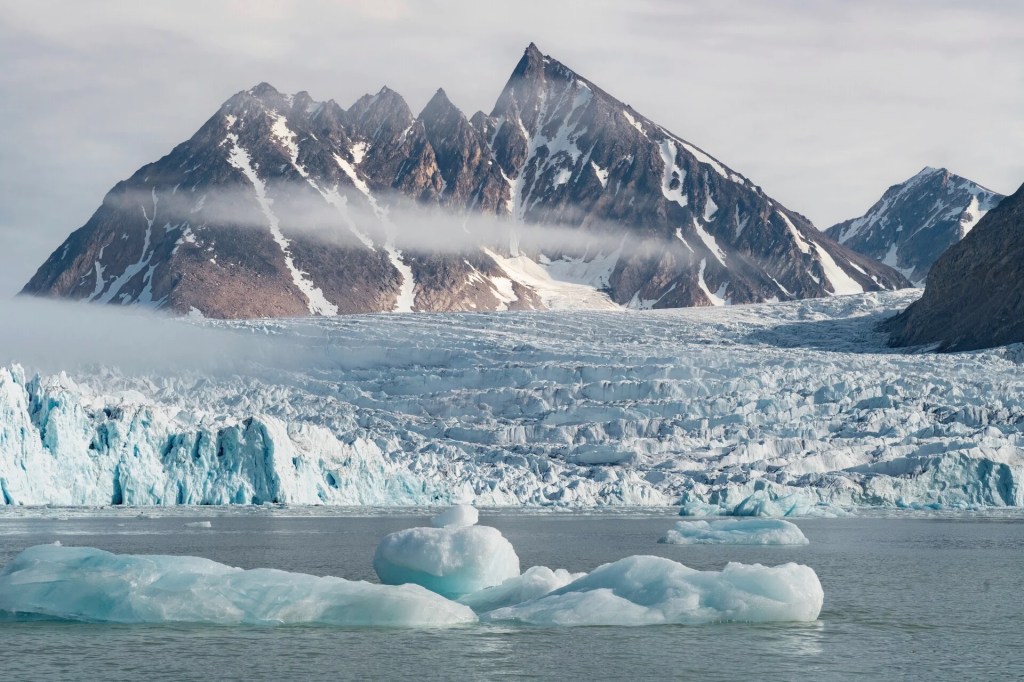
The island belongs to Norway since 1920 but it is 500 miles far away from Norwegian Mailand and 650 miles far away from the North Pole. The next fact is that the wildlife is free and rich but the cats are banned. Why? The birds population has a strong protection and that’s why the cats are not welcomed here.

Did you know that 60% of the surface is always covered with ice ? That’s because this archipelago consists of 9 Arctic islands: “Spitsbergen, Nordaustlandet, Edgeøya, Barentsøya, Prins Karls Foreland, Kvitøya, Kong Karls Land, Bjørn Island, and Hopen, and a number of smaller outlying islands. The total land area of Svalbard is 24,209 square miles. “

This arctic desert , as it is classified , has more than 2,100 glaciers, 60% of land is protected due to the national parks, there is no vegetation and trees and you are obligated to wear the weapons so to be able to be protected. Funny or not , this is the safest place in the world with zero criminal and has its own immigration rules. You are entitled to come here , live and work with no visa requirements but you need job and means for life.

The traffic jam is rare but you must understand that there are more snowmobiles vehicles than people. The population of 3,000 polar bears also outnumbered people with 2,700. The island is a safety port for blue whale and many other marine animals. This means that the beauty of Arctic wildlife is alluring.

So, are you ready to go ? To see and experience the midnight sun, polar bears and dream of dancing together with Northern Lights? Me too. Maybe I stay … or not … since I can’t without my cats .

Enjoy to the northernmost corner of our Earth!


 SARAH MAX RESEARCH
Sarah’s informative and alluring article reminded me of The Cold War aspects of Svalbard…
The appellation of ‘Svalbard’ is a Nordic analogue of ‘Svalbarði’ (i.e. sval = frozen + barð = edge/ridge). The toponym reaches back to Mediaeval Old Norse, when Nordic mariners first documented it in 1194. Various 15th-century Dutch mariners gave it another name, but The Svalbard Act of 1925 made the appellation definitive on cartographic data.
It was during the 1920s that the Soviets established agreements with the Norwegians to create coal mining settlements across Svalbard. The last of these was closed in 1998. By the late-1980s, there were about 2,500 Soviet citizens on Svalbard. During World War II and The Cold War, the location had become strategic for the Soviet military, as well. The Soviets never established permanent military bases on Svalbard, but The Treaty of 1935 allowed for industrial shipping of the Soviets to come and go from the local ports and these vessels required protection from the Soviet Navy.
Both The Cold War and Norwegian commercial development on Svalbard resulted in environmental issues across the region, which continue today through Norwegian activities… Climate change impacts on glaciers melting, loss of sea ice, permafrost thaw and the weakening of the ecosystems sustaining wildlife. This includes increased storm activity, invasive species and pollution.
The indigenous wildlife of Svalbard includes polar bears, walruses, reindeer, seals, puffins, Arctic foxes and voles; all of which are under extreme threat of survival…
LikeLike