

WHERE ARE THE BOUNDARIES OF PROFIT ?
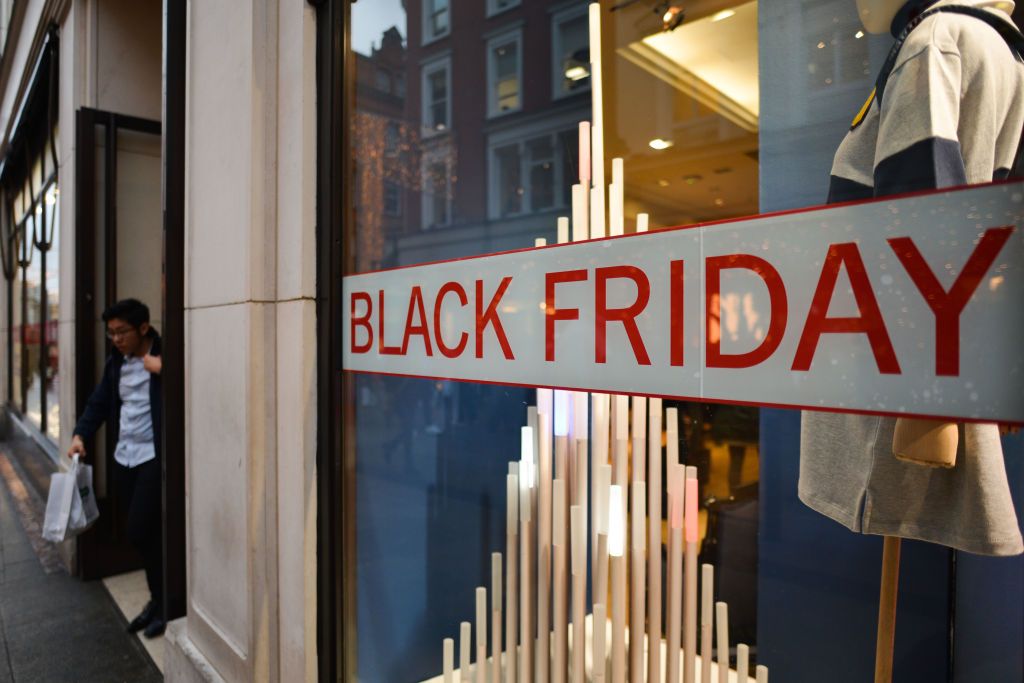
“Black Friday: because only in America people trample each other for sales exactly one day after being thankful for what they already have “
-Someone smart
You would think that all great things come from America. That’s true, somehow. However, there are some that are popular around the world, without the knowledge what is the story behind. One of them is the Black Friday mania around the globe, that keep spreading like a virus, each year. The fascinating fact about is that we are all in that infection circle, burning under the money fever and still don’t know how to stop ourselves for being vacuumed by consuming society. The high industry system has taught us that everything could be bought/ sold and we only need to take a look and pay. We need all those stuffs even if we don’t need them really. It is like a mantra nowadays, the successful formula of the wrong world in the wrong dimension. You hunt even when you have enough stored food and you are hunted and haunted, to be the same as each who shops, always more, everywhere.

Did you know that Black Friday is linked to the first Friday for shopping, after Thanksgiving, which is always the fourth Thursday in November. This year is Black Friday on November 24th while the next year, will be on November 29th. The name itself is referring the financial panic in the US, spread by gold speculators, in 1869, September 24th. That was the first known Black Friday, after financier Jay Gould and railway businessman James Fisk wanted to corner the gold marked and the outcome was the financial agony and collapse of the market. They have been known for their cruel economic calculation, hoping to buy the national gold as much as possible and to sell it for big prices. That invoice has been a failure of Wall street and all their players. This is not the only evidence since many years later, we have another crisis in 1929., stock market crash, as the onset of the Great Depression.

Why is Black Friday so popular? Because the Christmas time is close and people are willing to buy more for less money or, at least, they believe so. They need presents and they are in good mood for paying and getting them. The truth is not so simple. Some believe that this concept originates from the idea that many business units operate at a financial loss, or they are basically in red zone. The day after Thanksgiving, with massive sale storm, they can turn it into the profit and go to the black zone. But this is also not completely accurate: “A more accurate explanation of the term dates back to the early 1960s, when police officers in Philadelphia began using the phrase ´Black Friday´ to describe the chaos that resulted when large numbers of suburban tourists came into the city to begin their holiday shopping and, in some years, attend Saturday’s annual Army-Navy football game. The huge crowds created a headache for the police, who worked longer shifts than usual as they dealt with traffic jams, accidents, shoplifting, and other issues. The phrase `Black Friday´ to signify a positive boost in retail sales didn’t grow nationwide until the late 1980s, when merchants started to spread the red-to-black profit narrative. Black Friday was described as the day stores began to turn a profit for the year and as the biggest shopping day in the United States. In truth, most stores saw their largest sales on the Saturday before Christmas . In more recent years, Black Friday has been followed by other shopping holidays, including Small Business Saturday, which encourages shoppers to visit local retailers, and Cyber Monday, which promotes shopping online. Giving Tuesday has also emerged to spur charitable donations.”
This American concept of shopping has been planted in each continent due to the hunger for profit that is slowly replacing the holiday shopping purpose. At the beginning, it might be another mission with this day but then it was abused in the daily shopping glossary and economic budget in the micro and macro level. We all want to get more for what we are capable to have and that’s human, ok. Nevertheless, the whole theater behind the Black Friday, Cyber Monday and Giving Tuesday is losing its content. The retailers and shoppers have the same goal but another route. One want to earn as much as possible and another want to get as much as possible, both knowing where is the border between profit based on sustainable consumerism.

Don’t get me wrong, I am not preaching here or not showing my attitude since I am also the confidential victim of the shopping madness. I am just asking myself for how long we will accept to be players on the scene that is always getting more and more careless public. One day, we will wake up living in the Matrix reality but with the access to buy things that are owning us, at the end of the Black any day.


 SARAH MAX RESEARCH
Sarah’s informative article is a reminder how progenitors of economic crises in the USA are never punished (e.g. Lehman Brothers, 2008), as they are intrinsic to the system that creates the crises… It should be renamed ‘White Friday’, as it is white elites who cause the fiscal issues, usually: the adjective ‘black’ should not be used in a negative manner, in my opinion.
The scandal Sarah refers to in her article (i.e. the panic of 1869) was not dissimilar to what occurred in 2008 with the Lehman Brothers bankruptcy: instead of prosecuting the perpetrators, the US-government bailed out US-companies, while ordinary US-families lost houses, jobs, etc.
The US-Civil War (i.e. 1861-65) gave rise to a profound national debt and to confront this President Ulysses S. Grant’s administration attempted to sell US-Treasury gold reserves to stabilise the US-dollar. Speculators took advantage of this policy and began hoarding gold sales to force an eventual price hike (i.e. insider trading via close relationship with Grant family). The President’s economic advisers informed him that the scheme would backfire and the speculators were forced to release their hoarded gold. Yet, the Grant family did profit from the scheme.
None of the senior speculators were prosecuted and the subsequent Congressional investigation exonerated President Grant of any wrongdoing. The speculators were allowed to remain as Wall Street powers… They both retired as multimillionaires.
Across the USA, farmers (i.e. they constituted 55% of the entire national workforce) suffered the most from the scandal of 1869: wholesale grain and livestock prices decreased, significantly. Many farms became bankrupt, hundreds committed suicide, some farmers turned to armed crime (e.g. robbery) and US-agribusiness would take decades to recover… At least 40% of the affected farming families became industrial working families in large US-cities.
The legacy of 1869 continues today…
LikeLike